Your 5 most important points checklist while (re)branding your restaurant
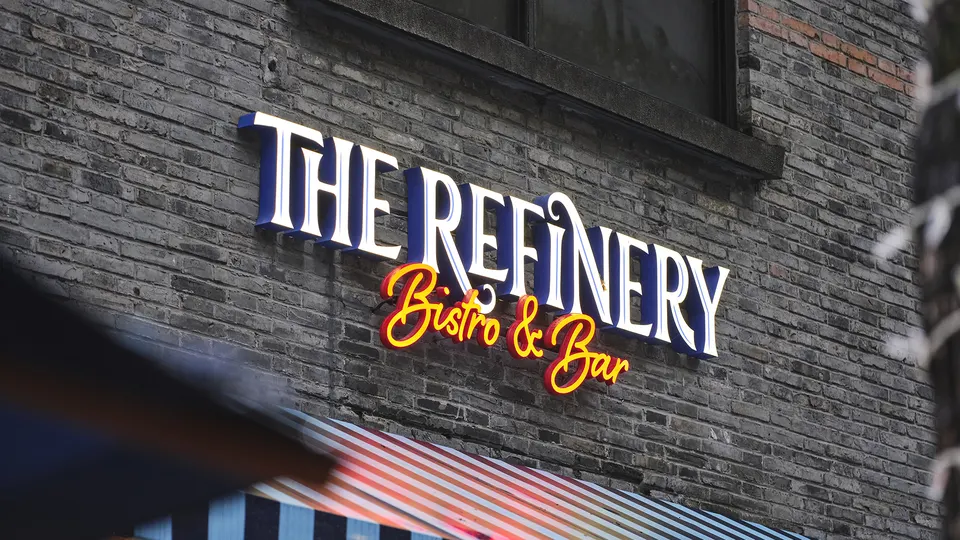
Most restaurants that come to us for a rebrand are not in trouble. The Refinery was the most popular restaurant and bar in Xintiandi when its team decided, after seven years, that it was time for a makeover. The harder question is what to change and what to leave alone. These are the five points we work through, with examples from our own projects.
Define your personality
Who are you?! Before you start the rebranding process, it's important to have a clear idea of what you want your restaurant brand to stand for. Consider what makes your restaurant unique and how you want to position yourself in the market.
In practice this starts with an audit and a workshop, not a logo. At Homeslice we audited the brand, ran workshops with the team and tested their instinct that the few brand assets they had were not carrying the core message: New York slices and a strong New York attitude. Research showed they were right. Homeslice already had its green box, so we made it the centre of the identity instead of replacing it.
The useful question is what is true about you that a competitor could not claim. Saigon Mama’s really did have mum in the kitchen, so the brand was built around her.
Ask yourself: if every member of your team described the restaurant in one sentence, would it be the same sentence?
Know your target audience
Understanding who your guests are, and what they are looking for in a dining experience, is crucial when rebranding a restaurant. Conduct market research to gain insight into your target demographic's preferences and habits.
Research does not need to be a large study. It needs to follow the guest from first hearing about you to paying the bill, and find where that journey breaks. At White Castle in China the brand was attracting a very young audience, and sliders were a new idea that often confused people at the counter. The answer was a clearer position and messaging written for those guests.
Be just as clear about who you must not lose. One of the three questions Pho Store brought to us was how to rebrand without confusing customers. V Coffee was a refresh, not a reinvention, so regulars still recognised the brand they already bought.
If you are moving upmarket, the audience changes with the address. We named Shanghai Brewery’s premium sister venue after its street, Donghu, the way a hotel on Park Lane sets a higher expectation than one beside an exhibition centre.
Ask yourself: which guests are you trying to gain, and which would you be sorry to lose?
Develop a consistent voice
Your brand voice should reflect the personality and values of your restaurant. Ensure that your messaging is consistent across all touchpoints, including your website, social media, and advertising.
Consistency is a production problem as much as a creative one. The week after launch, someone on your team has to make a poster, a delivery platform banner and a social post without calling the agency. So a rebrand should end with tools: templates, a photography guide and guidelines people can follow. At The Refinery we turned tens of new marketing assets into guidelines and gave the team templates. At Cages the brand was defined and rolled out across every touch point, ready for a national franchise.
If you work in two languages, voice includes how the two scripts sit together. At Homeslice we redrew the English and Chinese lettering so they balance.
Ask yourself: could a new member of staff produce next week’s promotion from your guidelines alone?
Revamp your menu
Rebranding a restaurant is an opportunity to update and refresh your menu. Consider incorporating new dishes, updating existing ones, and sourcing local, sustainable ingredients.
The menu is the one piece of branding every guest reads. Give it a brief of its own: what should sell, in what order, and with or without pictures. Picture menus are common in China and hard to do well. At The Refinery, designing one was among the main challenges.
If the brand comes from somewhere else, check that the menu travels. Working with Chili’s US and local teams, we rewrote, art directed, shot and designed a new menu for Asia, because what works at home doesn’t always perform in other markets.
Plan the photography with the menu. A new identity wrapped around old food photos looks half finished.
Ask yourself: does the menu lead guests to the dishes you most want to sell?
Refresh your space
This might have been at number one, but it can be big budgets. A restaurant's interior is a significant part of its brand identity. Consider updating the décor, lighting, and layout of your space to reflect your new brand identity. This can help create a more cohesive and memorable dining experience for your customers.
You do not have to rebuild. Decide which few pieces will carry the brand in the room and spend there: the sign, the entrance, one wall, the things guests hold. At Penrose we changed over three existing restaurants at the same time in six weeks, and two of them stayed open throughout. That was possible because we chose versatile brand anchors that worked across different types of store. The terrace was full on the first day.
Everything in the room should belong to one brand universe. It is not about choosing nice things. At The Refinery that ran from custom art on the walls down to the design on the plates.
The team is part of the room too. A team that looks good in what they wear feels confident in their service.
Ask yourself: if you could change only three things a guest sees or touches, which would do the most?
Last, plan the changeover. Decide early whether everything switches in one night or in stages, and tell your regulars what is coming. A good design can still be let down by a muddled launch.
More news & insights
All news & insights
One venue, three brands: how we named FIRA, KIPO and DOXA
Inside the brand structure of a Phuket beach club, its Mediterranean restaurant and its cocktail bar.

Thread turns 20
Twenty years ago today, Thread opened in Shanghai. What two decades of branding restaurants, bars and global brands has taught us, and where we are…
A new stage for Mise en Play
Thread Design has launched a new website for Mise en Play, the creators of immersive culinary experiences for tourism, hospitality and entertainment.…